Before the Ballot, the Scale House: Nebraska’s Grain Elevators as Civic Listening Posts
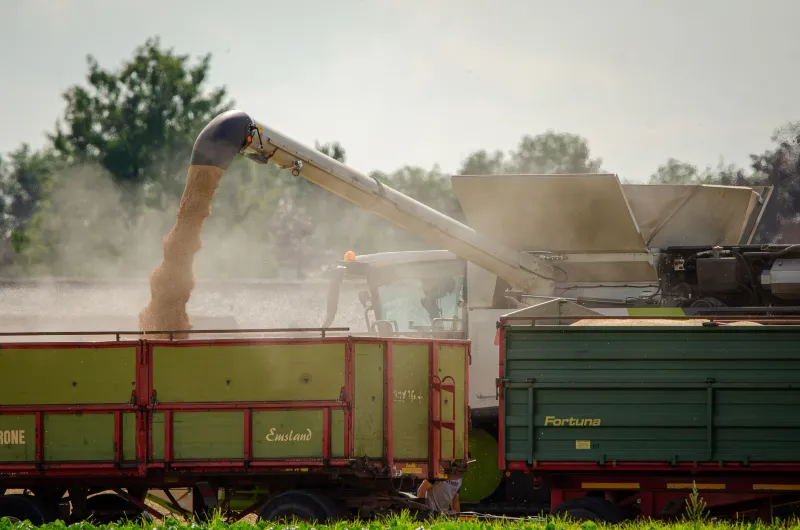
The truck line starts before sunrise. By midmorning, pickups and semis are stacked out toward the county road, and the scale house has become a temporary office, complaint desk, weather station, and rumor exchange. Somebody is talking about moisture. Somebody else is talking about the school board. A third person is holding forth on property taxes with the confidence of a man who has never once attended a budget hearing.
This is not a city council meeting. There is no agenda, no podium, and no three-minute speaking limit. But in a lot of Nebraska towns, the grain elevator is where a public issue gets its first real hearing. Before a bond issue reaches the ballot, before a cooperative board election draws a crowd, before the county commissioners vote on a road budget, the subject has usually been chewed over beside a scale, a loader, or a pot of coffee that has been on the burner since 6:15 a.m.
The first hearing is usually standing up
Formal civic life has rituals. Meetings are noticed. Minutes are kept. People raise their hands. The elevator has its own rituals, and they are looser. You pull in, you wait, you visit. The conversation moves from yield to weather to the price of parts to why the town pool might not open next summer.
That looseness is the point. A farmer who would never sign up for public comment will say plenty while waiting for a truck to clear the pit. A retired teacher might mention that the school board is looking at a facilities study. A young parent might ask whether anybody knows what is happening with the daycare. Nobody is taking minutes, but information moves.
In 2026, that matters. Nebraska’s smaller communities are wrestling with familiar pressures: tight property tax conversations, school consolidation worries, rural housing shortages, volunteer shortages, and the slow grind of infrastructure needs. Those issues do not arrive fully formed at the courthouse. They start as questions. The elevator is one of the few places left where those questions can be asked without a microphone.
A weather report with a side of accountability
Part of what makes the elevator a civic space is that it is also a business. People are not there to philosophize. They are there to deliver grain, check a scale ticket, buy fuel, or find out when the probe will be back online. That practicality keeps the talk grounded.
It also creates accountability. If someone says the county is dragging its feet on a bridge repair, somebody else in line probably knows the county supervisor or has driven that road. If a rumor about a school proposal gets too tall, there is a decent chance a board member’s neighbor is standing nearby. Nebraska is not so small that everyone knows everything, but it is small enough that exaggeration has a short shelf life.
The elevator is not a newspaper and should not be treated as one. It is more like a first draft of public opinion—messy, repetitive, occasionally wrong, and sometimes surprisingly sharp. A good civic conversation there can send people home with a question worth asking at the next meeting. A bad one can send a rumor down the road faster than a loaded truck.
The limits of a coffee-pot public square
It would be easy to romanticize the elevator. Small-town gathering places are not automatically democratic. The coffee pot has a social pecking order. The people who feel comfortable lingering are often the people who already know the regulars. A new resident, a younger farmer, a woman in a male-dominated ag business, or someone who works an off-farm job may not feel invited to pull up a stool.
There is also the problem of volume. The loudest voice in the scale house is not always the best-informed one, and a forceful opinion can crowd out a quieter fact. Gossip can turn into judgment before anyone checks the record. That is not unique to elevators. It happens in cafés, church basements, and Facebook groups too. But any place that functions as an informal public square needs a little self-awareness.
The best version of the elevator forum is not a place where everybody agrees. It is a place where somebody can say, “Have you asked the board about that?” or “That number sounds off—where did you hear it?” That kind of gentle pushback is neighborly accountability. It does not require a gavel.
Why it still matters in 2026
Nebraska’s civic life is changing. Meetings are livestreamed. Public notices show up online. Property tax debates play out in email threads and at the Capitol. All of that is useful, but it can also make local government feel like something that happens elsewhere, conducted by people with better Wi-Fi and more patience for PDFs.
The elevator is not a replacement for any of that. It is a front porch. It is where a public issue becomes human enough to talk about. In a year when rural communities are trying to hold onto young families, keep volunteer rosters filled, and make hard decisions about schools and roads, that front-porch function is not nostalgia. It is infrastructure.
So the next time you are waiting in line at the elevator, listen for the civic news between the grain prices and the weather. You might hear a rumor. You might hear a complaint. You might hear the first honest question about something that will be on a ballot next year. And if you are the one doing the talking, remember the old rule of the scale house: bring your opinion, but leave room for the next truck.
Pull up a stool, but bring your listening ears
The elevator will never be a perfect town square. It is a business, a workplace, and a place where people are trying to get a job done. But in much of Nebraska, it is still one of the few shared spaces where the harvest gossip and the civic news mix. That mix is not always tidy, but it is useful.
Democracy in rural Nebraska does not begin at the ballot box. It begins with someone asking a question while the truck idles. The elevator is where a lot of those questions get their first airing. Treat it like the listening post it is, and the whole town benefits—even the guy who is still mad about the road grader.