The Warmest Room in Town Has a Due Date: Nebraska’s Small Libraries Are Still the Neighborhood’s Living Room
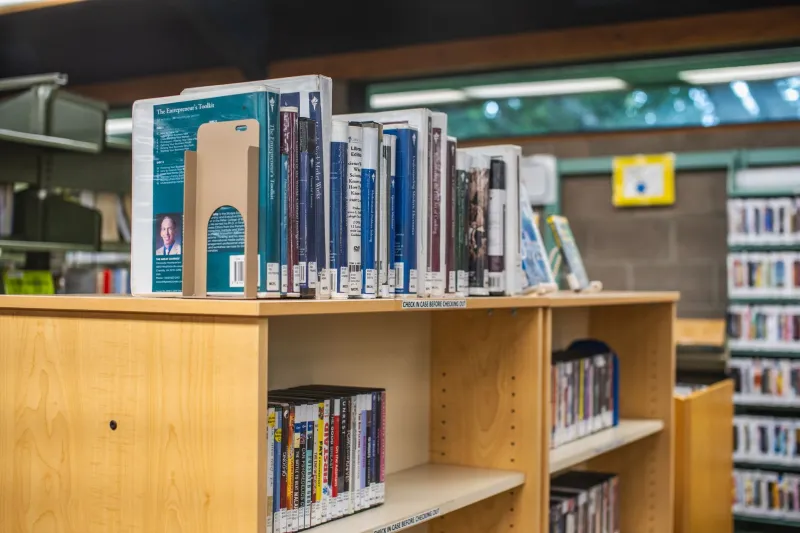
On a Tuesday afternoon that smells like rain and diesel, the library door in a small Nebraska town swings open and lets in a kid with a backpack, a farmer with a seed catalog, and a retired neighbor who just wants to know whether the meeting is still on for Thursday. Nobody whispers. Nobody shushes. The librarian looks up, nods, and goes back to helping someone print a form.
This is not the library of the old cartoon: a stern figure behind a desk, a room full of silence, a stack of books nobody touches. In rural Nebraska, the library is often the warmest room in town—a place with free Wi-Fi, a public restroom, a coffee pot, a bulletin board, and a person who knows which committee meets when. The books are still there. They are just not the whole story.
More Than a Place to Whisper
A library card is still free, and so is the welcome. That matters in towns where the nearest grocery store might be twenty minutes away and the nearest big-box store might be an hour. The library offers heat in the winter, air conditioning in the summer, and a table where a job application can be filled out without balancing a laptop on a pickup tailgate.
For older neighbors, it is a place to check email, scan a document, or ask a question that does not feel foolish. For young families, it is a story hour, a craft table, and a break from the house. For everyone, it is a third place—not home, not work, not church, but somewhere in between. Somewhere you can be alone without being lonely.
The Librarian as Switchboard
The person behind the checkout desk is often the town’s unofficial switchboard. They know which church has the food pantry schedule, which handyman is taking small jobs, which board meeting moved to the Legion hall, and which teenager is looking for volunteer hours. They are not gossips. They are routers. A question comes in the door, and they point it toward the right person.
That role is hard to put in a job description. A librarian in a small town might be a notary one hour, a tech support line the next, and a calm presence during a tense public meeting after that. In 2026, with so much civic information scattered across websites and social media, the library still offers something old-fashioned and useful: a human being who can help you find the next step.
Seed Swaps and Sourdough Starters
Walk into some rural libraries in late winter and you will find a card table covered in envelopes of tomato seeds, squash seeds, and marigold seeds. The seed swap is simple: take a packet, leave a packet, ask a question. It is not a gimmick. It is a practical exchange of knowledge and a quiet way to help neighbors grow a little more of their own food.
Other libraries host sourdough starter swaps, recipe collections, craft nights, and genealogy workshops. The common thread is not the activity. It is the invitation. These programs give people a reason to walk through the door who might never come in for a novel. Once they are inside, they see the copier, the meeting room, the local history shelf, and the friendly face at the desk.
After the Last Bell
When school lets out, the library often becomes a landing pad. Kids do homework, use the computers, read on a beanbag, and wait for a ride. It is not a daycare, and librarians are not babysitters. But it is a safe, supervised place where a kid can be until a parent finishes a shift or a grandparent arrives.
That after-school role is easy to overlook until it is gone. In towns without a community center or a Boys and Girls Club, the library may be the only free indoor space for young people. The librarian becomes a trusted adult—someone who notices when a kid is having a rough week, someone who can point a family toward a resource, someone who keeps the door open.
When the Meeting Needs a Neutral Table
Public meetings in small towns can get crowded, and not every meeting has a neutral home. The library often provides one. Town halls, candidate forums, zoning conversations, library board meetings, and neighborhood associations can all use the same room. The library does not take sides. It provides chairs, a coffee pot, and a clock.
That neutrality is worth protecting. In a world of loud opinions and online arguments, a public room with a sign-up sheet and a time limit is a small civic miracle. The library does not guarantee agreement. It guarantees a place to show up.
The Fine Print Is Still Free
Some of the most important work at a rural library never makes the newsletter. It is the neighbor printing a tax form, the veteran scanning a document, the parent filling out a school lunch application, the student completing a financial aid form. It is the person who needs a fax number and does not have a fax machine.
The digital divide is not only about broadband. It is also about knowing where to click, how to attach a file, and whom to ask when the website times out. Librarians are not a substitute for expert advice, but they are often the first stop. They help people get to the right office, the right form, the right phone number. That is civic infrastructure with a due date stamped on the back.
A Small Budget, a Wide Welcome
Most rural libraries run on tight budgets, local tax support, grants, and the stubborn generosity of friends groups and volunteers. In 2026, every line item matters. But the library is not a frill. It is a return on investment that shows up as a kid reading, a job application completed, a meeting held, and a neighbor who feels a little less alone.
You do not need a library science degree to be a library neighbor. Join the friends group. Attend a board meeting. Donate a book in good condition. Volunteer for story hour. Ask the director what is actually needed before you drop off a box of old encyclopedias. Show up.
The warmest room in town has a due date, but the welcome does not. The light is on. The door is unlocked. And the person at the desk is probably helping someone find exactly what they need.