A Lift of the Finger, a Nod to Belonging: Reading Nebraska’s Roadside Wave
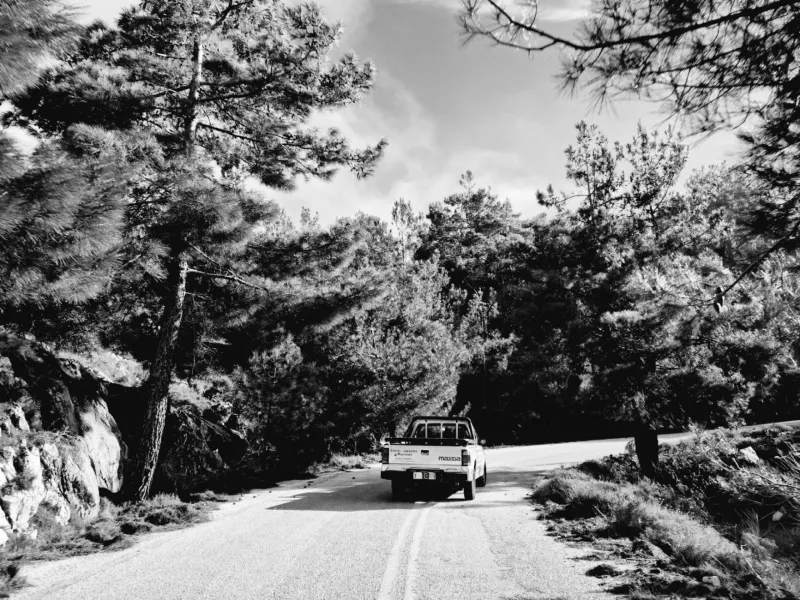
On a gravel road south of Seward, two pickups meet at a dusty intersection. Neither driver stops. Neither honks. The man in the older Ford lifts his index finger off the steering wheel—barely an inch—and the woman in the Silverado answers with a two-finger salute. Then they roll on, each with a little less stranger in the world.
That tiny exchange is one of Nebraska’s most durable social institutions. It doesn’t show up in the Unicameral’s agenda or on a ballot. It won’t make the evening news. But on county roads and two-lane highways from the Sandhills to the Missouri River, the roadside wave is how neighbors say, without saying: I see you. You’re not alone out here.
The Core Curriculum: One Finger, Two Fingers, Whole Hand
Ask around and you’ll hear the same taxonomy. The index-finger lift is the standard-issue hello—understated, efficient, suitable for passing a stranger at 55 mph. The two-finger salute, usually index and middle, is a little warmer, the small-town equivalent of a nod and a smile. The full-hand wave, palm up or palm forward, is for someone you know well, someone who might otherwise expect a conversation. And the steering-wheel wiggle? That’s for the neighbor who lent you a trailer last summer.
“It’s not something anybody teaches you,” said Darlene, a retired postal carrier who has driven the same routes in central Nebraska for decades. “You just pick it up. Pretty soon your hand lifts before your brain catches up.”
Newcomers notice. Some find it charming. Some find it confusing. A few confess to waving back too eagerly—full hand, big smile—only to realize they’ve just greeted a combine.
Who Waves First?
Road etiquette has a pecking order, though nobody wrote it down. The driver on the gravel often waves first, since dust and washboard roads make eye contact a fleeting thing. The person in the smaller vehicle usually initiates. The one with the dog in the back seat gets a pass. And anyone driving a tractor? They wave at everybody, partly because they’re moving slowly enough to mean it.
There’s also the matter of familiarity. In town, you might wave at half the cars you pass. On the highway, the wave is more selective—a quick lift for the oncoming pickup with a familiar logo on the door, a nod for the mail carrier, nothing for the out-of-state sedan with a roof box and a windshield full of vacation.
“You can tell who’s from here by the timing,” said Miguel, who moved to a small town near Grand Island six years ago. “The first year, I was late on every wave. By the time I lifted my hand, they were already past. Now I feel it coming.”
The Wave Has Rules, Just Not a Rulebook
The gesture changes with speed and surface. On a paved highway, the one-finger lift is enough. On gravel, where both drivers are doing 25 and trying not to lose a mirror to a washboard, the wave can stretch into a full-hand greeting. In winter, when windows are rolled up and mittens are on, the wave becomes a two-second palm flash through the windshield—Nebraska’s version of a semaphore.
Weather matters, too. During harvest, waves between truck drivers and combine operators are frequent but brief. During a snowstorm, the wave is less about hello and more about good luck. And at the intersection of two county roads, where four-way stops are rare and common sense is the traffic signal, the wave is often accompanied by a slight lift of the chin: your turn, or maybe mine.
What It Says About Trust
The roadside wave is small, but it carries a lot. In rural places, recognition is a form of insurance. It says: I know your truck. I know your family. If I see you pulled over with a flat tire, I’ll stop. If your cattle get out, I’ll call. If the power goes out, I’ll check on you.
That’s not nostalgia. It’s practical. In communities where the nearest grocery store might be 30 minutes away and the nearest hardware store farther still, small acknowledgments build the kind of trust that gets people through a blizzard or a bad year.
“It’s a little thing,” Darlene said. “But little things add up. You wave at somebody every day for 20 years, and pretty soon you’re not strangers. You’re neighbors.”
A Newcomer’s Field Guide
If you’re new to Nebraska roads, here’s a starter kit:
- Start with the one-finger lift. It’s the least intrusive, most widely accepted greeting.
- Match the energy. A two-finger salute for a familiar face; a full-hand wave if you’re the only two vehicles for miles.
- Don’t overthink it. A late wave is better than no wave. A nod works, too.
- Watch the locals. If the oncoming driver lifts a finger, lift one back.
- Keep both hands on the wheel in town. A wave is neighborly; a wave at every pedestrian, cyclist, and parked car is a hazard.
When the Wave Goes Wrong
There are risks. Wave at someone you don’t know, and you might get a puzzled look. Fail to wave at someone you do know, and you might hear about it at the co-op. The wave is forgiving, but it has a memory.
Then there’s the over-wave—the enthusiastic, full-arm greeting delivered to a stranger who turns out to be a salesman from Kearney. It happens. The best recovery is a small nod and a quick return to 10 and 2.
Small Gesture, Long Memory
The roadside wave won’t solve the big stuff. It won’t fix a school budget or fill a volunteer fire department roster. But it does something quieter: it keeps the social fabric from fraying. It reminds people that the road isn’t just pavement and gravel. It’s a shared space, and the people passing by are not extras in your day.
So the next time a pickup comes toward you on a county road, lift a finger. You might not know the driver. You might never learn their name. But for a second, you’ll both be part of the same small, neighborly story.