Everything but the Kitchen Table: A Nebraska Farm Auction Is Part Reckoning, Part Reunion
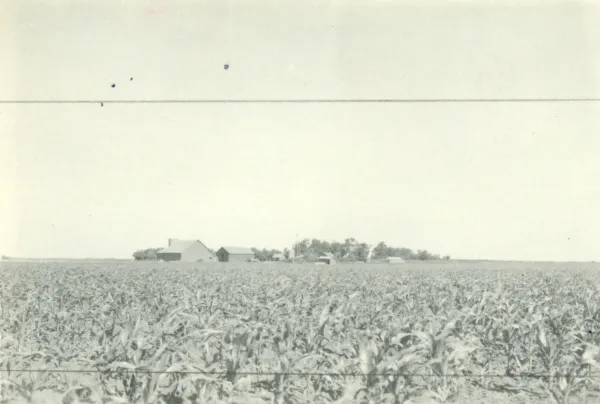
Photo: Mennonite Church USA Archives, No restrictions, via Wikimedia Commons
The sale bill appears at the co-op counter a couple of weeks before the auction, thumbtacked between a cattlemen’s meeting notice and a card for a lost heeler. It is printed on fluorescent paper, the kind that seems to glow from inside the store. By the time the coffee pot is empty, three neighbors have already read it aloud.
That is how a farm auction starts in rural Nebraska — not with a gavel, but with a piece of paper that says everything must go.
On a cool Saturday morning this fall, a few miles north of Broken Bow, pickups began lining the gravel driveway before the sun had done much more than light the edge of the field. The sale was for the Hesse family, who had farmed that ground for three generations. The equipment sat in rows like a patient crowd: a tractor with faded paint, a grain drill, a stock trailer, a pickup with a dent in the tailgate that nobody bothered to explain.
And near the shop door, a long folding table held the smaller stuff — wrenches, chains, oil cans, a coffee thermos with a cracked lid, and a kitchen table that had been hauled out of the house because, as one daughter put it, “Somebody ought to get some use out of it.”
The Sale Bill Is the Invitation
Auction sales are practical events. They settle an estate, retire a farmer, or clear the way for the next chapter. But they are also social events, and everyone in the yard knows it. The sale bill is the invitation. The co-op, the café, the elevator, and the church bulletin board all do their part to pass the word.
“You see who shows up, and you see who they brought,” said Merle, the auctioneer for the day, a wiry man with a microphone headset and a clipboard he barely glanced at. “Half the people here aren’t buying. They’re bearing witness.”
That is not a knock. Bearing witness is part of the job. When a family sells the machinery that made its living, neighbors come to stand in the yard, drink coffee from a thermos, and quietly let the family know they are not alone in the reckoning.
The Auctioneer Sets the Clock
Merle started slow, almost conversational, then found his rhythm. His voice rose and fell like a engine finding its gear. He called out numbers, teased the crowd, and kept one eye on the ringmen who moved through the crowd looking for a lifted finger or a nod.
“A bid is a bid,” Merle said between lots. “I don’t care if it’s a wink or a wave. But you better mean it.”
Auctioneer cadence is its own dialect. It is not fast for the sake of fast. It is fast because a sale has a clock, and the clock is the day. The family has a mortgage to settle or a retirement to fund. The crowd has livestock to feed and chores waiting. The auctioneer’s job is to turn a hard morning into a clean transaction without letting it become maudlin.
“He knows when to slow down,” said Arlene, a neighbor who had come with her husband and a thermos of decaf. “When he gets to the tractor, he’ll slow down. That’s the one everybody’s been talking about.”
Three Generations on the Trailer
The Hesse family stood near the shop, trying to look casual. The oldest son, Danny, answered questions about the equipment with the patience of a man who had already explained it a dozen times. His mother sat in a folding chair with a notebook, writing down sale prices in a careful hand. A granddaughter sold candy bars out of a cooler to raise money for a school trip, because life does not pause for an auction.
“My granddad bought that drill in the fifties,” Danny said, nodding toward a piece of equipment that looked more like sculpture than machinery. “It’s worn out. But it’s not junk. Not to us.”
That is the tension of a farm sale. The equipment is both a tool and a memory. The family needs the money. The neighbors know it. The bidding is not cruel, but it is real. A tractor sells for what a tractor sells for. The past does not add a premium.
Still, there are small mercies. A neighbor bought the kitchen table for twenty dollars and immediately told the family he would keep it in his shop. Another bought a box of hand tools and then handed Danny a wrench back, saying, “This one was your dad’s. You ought to keep it.”
The Crowd That Bids and the Neighbors Who Carry
By noon, the yard had the feel of a church basement dinner without the plates. People stood in small groups, catching up on surgeries, football scores, and the price of fertilizer. A teenager held a leash with a dog that had clearly not been invited but had come anyway. Someone passed a bag of donuts down a row of chairs.
The bidding itself was mostly quiet. A nod here, a raised finger there. The ringmen moved like ushers, guiding the crowd’s attention. When a lot stalled, Merle did not scold. He told a joke, then asked again. When a young couple bid on a stock trailer and won, a few people clapped. When a dealer from out of county won the big tractor, the crowd went quiet for a beat, then moved on.
That is the neighborly arithmetic of an auction. Not every dollar stays local. But the day does. The help does. The casseroles do.
After the sale, a handful of neighbors stayed to help load. They did not ask. They just found the right hitch, the right chain, the right angle. Danny shook hands until his palm was sore. His mother closed her notebook and looked at the empty rows where the equipment had been.
What the Gavel Leaves Behind
A farm auction does not end when the last lot sells. It ends when the last pickup pulls out and the family walks back to the house. The yard is quieter. The sale bills come down. The co-op counter gets a new notice.
But the reunion leaves something behind, too. A town that shows up for a hard day is a town that knows how to carry its people. The Hesses will remember who came. The neighbors will remember what they bought and what they gave back. And somewhere, a kitchen table will get a second life in a shop, which is its own kind of Nebraska happy ending.
“You hate to see it,” Merle said, coiling his microphone cord. “But you’re glad people came. That’s the deal out here. You show up.”