The Mower Shed Key: How Nebraska’s Smallest Board Keeps Country Cemeteries Tended
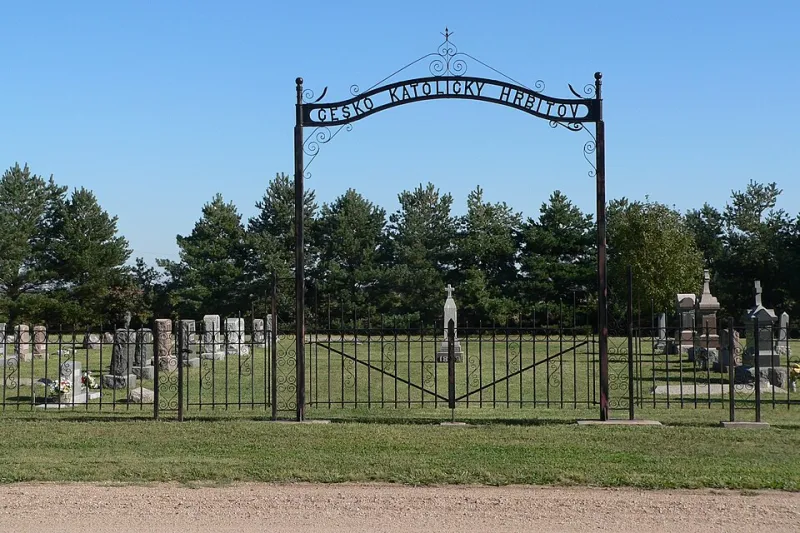
Photo: Ammodramus, CC0, via Wikimedia Commons
On a windy afternoon in June, the most important government office in a certain Nebraska precinct is a shed behind a Lutheran church. The key hangs on a nail. The mower inside has a deck nearly as wide as a pickup tailgate and a battery that needs a trickle charger. The person who turns that key is not a mayor or a county commissioner. She is a cemetery district trustee, and her job is to make sure the grass does not swallow the headstones before Memorial Day.
That is the quietest board in Nebraska. It does not usually make the front page. It rarely argues about zoning. But it holds something neighbors care about deeply: the ground where families come back to say names out loud.
A Government Small Enough to Fit in a Pickup
Nebraska has a lot of local government. Counties, cities, villages, school districts, natural resources districts, townships, fire districts, and cemetery districts all sit somewhere on the civic map. Cemetery districts are among the smallest. Some were created by a county board. Some are run as nonprofit associations. Some are still tied to a church that started the grounds a century ago. The structure varies, and that is part of the confusion.
What they share is a simple job: care for a burial ground that is no longer supported by a church or a family alone. A board of trustees, often three or five neighbors, handles the mowing contract, the checkbook, the plot map, and the small property tax levy that keeps the lights on. In many places, the trustees are appointed by the county board. In others, they are elected or chosen by an association. The details depend on how the district was formed.
You can find the basics at the county clerk’s office or in the district’s public records. The budget is filed. Meetings are noticed. It is not secret government. It is just small government, the kind that runs on a notebook and a volunteer’s pickup truck.
The Budget Is Mostly a Mowing Schedule
A cemetery district budget is not abstract. It is fuel, oil, belts, blades, and a backup string trimmer. It is liability insurance. It is gravel for the lane and flags for veterans’ graves. It is the tree guy who comes when a limb drops on a fence. And in a dry year, it is the question of whether to mow less and let the grass go dormant, or keep the same schedule because families expect the grounds to look cared for.
Most cemetery districts are funded through a small property tax levy within the district, plus plot sales, perpetual care funds, donations, and sometimes help from a township or county. The levy is tiny compared with a school district or a city budget, but it still shows up on a tax statement. That makes it a civic thing whether you own a plot there or not.
The trustees set the mowing schedule in the spring. They watch the forecast. They decide whether to hire a custom mower or keep using the district’s equipment. They keep receipts. They hold a budget hearing. In 2026, like most years, the biggest arguments are usually not philosophical. They are about a repair bill, a wet spring, or whether the back fence needs replacing before winter.
The Ledger of Plots
Every cemetery has a map, even if the map is a hand-drawn page in a three-ring binder. The map says who is buried where, which plots are sold, which are open, and which family has been trying to get a marker set for two years. Trustees answer those questions. They also keep the deed book and the burial records. When a family drives in from out of state and cannot find a great-grandparent, the trustee is often the one who walks the rows with them.
That records work is easy to overlook until it is missing. A cemetery with a good ledger is a place where a family can find its story. A cemetery with a spotty ledger is a place where neighbors start comparing notes. The fix is rarely dramatic. It is a scanner, a spreadsheet, a printed copy in a fireproof box, and someone willing to sit at a table and sort names.
When the Board Needs New Hands
Here is the part that does not get said enough: cemetery boards are aging. Many trustees have served for decades. They know the mower, the water line, and the family who always brings flowers on the same weekend. But they also need replacements. A vacancy can sit open for months because nobody thinks to ask.
If you want to help, start small. Attend the annual meeting or the budget hearing. Ask the county clerk who the current trustees are. Offer to run the trimmer for a Saturday. Volunteer to place flags before Memorial Day. If there is a vacancy, ask how the appointment works. In some districts, the county board appoints trustees. In others, the association membership votes. The path is not always obvious, but it is usually open.
The worst outcome is not a heated vote. It is an empty chair and a mower that no one knows how to start. A county board can step in when a district stalls, but the better answer is neighbors who notice the need before the grass gets tall.
The Neighbor’s Part
You do not have to be a trustee to be part of this. If you see a leaning headstone, a downed limb, or a dry stretch of grass where the sprinkler should be running, call the trustee. Do not assume someone else already did. If you have a family plot, make sure the district has your current address. If you are handy with a mower or a weed whip, say so.
Country cemeteries are not parks. They are promises. The people who keep them mowed are not looking for applause. They are looking for the next person who will take the key off the nail. In a state full of long horizons and small towns, that quiet handoff is one of the most neighborly things we do.