The Minutes in the Sewing Basket: Nebraska Extension Clubs as a Training Ground for Town Boards
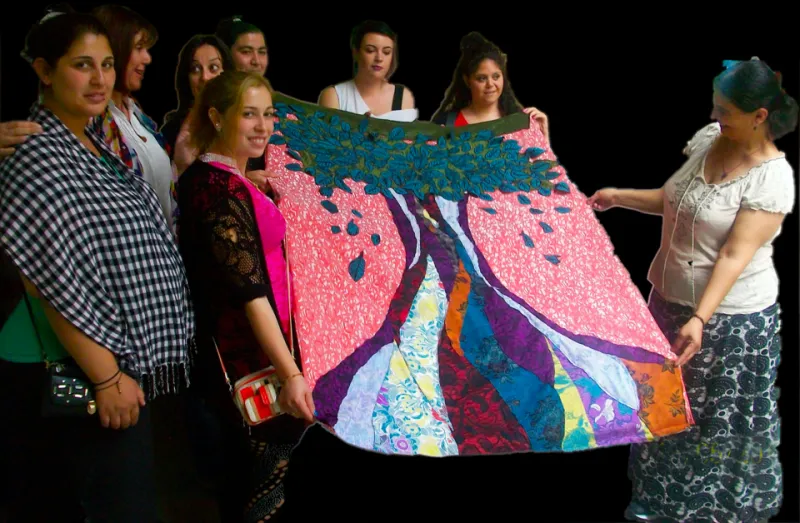
Photo: Roma Community Office, CC BY-SA 4.0, via Wikimedia Commons
The Meeting Starts With a Casserole Dish
On a Tuesday morning in a Nebraska county Extension office, the smell of coffee reaches the hallway before the meeting does. A quilt frame sits folded against the wall. A plastic tub of fabric scraps is labeled for a future scholarship fundraiser. Someone is passing around a sign-up sheet for bars—the kind you cut into squares, not the kind you order from.
It looks like a hobby gathering. It mostly is. But listen for twenty minutes and another layer shows up: a treasurer’s report, a motion to approve the county fair booth budget, a discussion about whether the club can cover entry fees for two 4-Hers headed to a state contest, and a reminder that the fairgrounds committee meets next week.
The agenda is not fancy. The politics are not loud. But this is where a lot of Nebraska civic life gets its first practice.
A Ladder With No Grand Announcement
Extension clubs, 4-H parent groups, homemakers’ councils, and project committees do not advertise themselves as leadership pipelines. They advertise quilting, canning, photography, livestock judging, and community service. The civic training arrives sideways.
A member learns to take minutes that someone else can actually read. Another learns to run a raffle without losing the receipts. A parent volunteers to chaperone a trip and ends up coordinating a scholarship committee. Someone else agrees to “just ask” the county board about fairground bathroom repairs and discovers they are good at asking.
By the time a vacancy opens on a library board, a school board, or a village council, the names in the room are familiar. Not because anyone plotted a takeover. Because the people who show up to the small meetings are the same people who show up to the bigger ones.
Robert’s Rules, Without the Powdered Wig
You will hear parliamentary procedure in these rooms, but you will rarely hear it called that. A member says, “Do we have a motion?” Another says, “Second.” Someone asks if the vote needs to be by ballot. The group approves the minutes. The treasurer gives a balance. The president says, “Old business,” and everyone knows what that means.
It is Robert’s Rules in work clothes.
The lessons are practical. How do you disagree with a friend and still pass the sugar? How do you table an idea without killing it? How do you explain a budget line to someone who thinks the club should spend the money on something else? These are the same questions that come up at a city council meeting, a school board work session, or a county fair board meeting—just with fewer neckties.
And because the stakes are low, people practice. A failed motion at a quilt club is not a scandal. It is a rehearsal.
Raffle Tickets and Real Budgets
Extension clubs handle money. Not huge money, usually, but real money. Raffle proceeds. Scholarship funds. Booth fees. Donations for a community project. A treasurer’s notebook may be a spiral-bound ledger with a rubber band around it, but the responsibility is the same one that shows up later on a board: spend carefully, report clearly, and do not surprise people.
That is civic training in miniature. A club decides whether to fund a scholarship, a fair entry, a community garden, or a 4-H trip. Members learn to ask what a dollar buys, who it helps, and whether the group can do it again next year. They learn that a budget is a set of priorities with a receipt attached.
When those same members later sit on a library board or a village council, the language changes. The habits do not.
The Fairgrounds Test
Ask anyone who has spent time in Extension work about fairgrounds, and watch the expression. Fairgrounds are where hobby groups, county boards, 4-H families, and local businesses all meet in the same conversation. A club wants a better show ring. The county has a maintenance list. The fair board has a schedule. Someone has to make the ask.
That ask is often a member’s first taste of local advocacy. Not lobbying in the capital sense—more like showing up at a county board meeting with a one-page handout and a reasonable request. It teaches neighbors how to prepare a case, bring the right people, and accept a “not this year” without taking it personally.
The clubs that do this well tend to produce people who can do it again. The ones that do not learn something too: bring the budget numbers next time.
Why It Stays Quiet
Part of the reason these groups work as training grounds is that they do not call themselves political. A sewing circle is a sewing circle. A 4-H parent meeting is a 4-H parent meeting. That framing keeps the room friendly. It also keeps the pressure low enough for people who would never run for office to try leadership on for size.
Some members will stay in the club for decades and never seek a board seat. That is fine. The point is not that every quilter becomes a council member. The point is that the skills circulate. Someone learns to run a meeting. Someone learns to keep the books. Someone learns to speak up without making it a fight.
In a state full of small towns, that circulation matters. Boards do not fill themselves. They fill with neighbors who have seen a gavel before, even if it was made of scrap wood and used to call a 4-H meeting to order.
The Next Seat at the Table
If you are looking for the quiet edge of Nebraska civic life, check the Extension calendar. Look for the club meeting with the coffee pot and the sign-up sheet. Listen for the treasurer’s report. Watch who volunteers to chair the scholarship committee.
Those are the people who will know how to run a meeting when the agenda gets harder. They are not a secret society. They are a sewing basket with minutes. And in a lot of Nebraska communities, that is where the next town board member is already sitting—probably with a needle in one hand and a motion on the floor.